30th September 2020
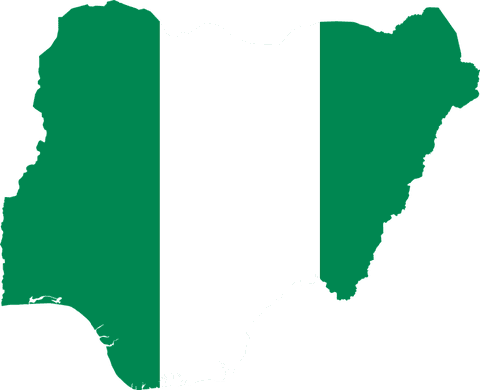
With a coastline of 852 kilometres bordering the Atlantic Ocean in the Gulf of Guinea and a maritime area of over 46,000 sqkm , Nigeria is no doubt blessed as a maritime nation. Also, Nigeria possessed a well fresh and mangrove swamps, creeks, coastal rivers, estuaries, bays, and offshore waters. Moreso, eight out of the 36 Nigerian states, with 25 per cent of Nigeria’s total population, share the Atlantic Ocean coastline.
However, Nigeria as a country is blessed with abundant resources in its oceans and seas to back its economic diversification and development drive.
But Nigeria at 60, is lagging behind in the comity of nations when it comes to ship ownership and maritime business. It is also unfortunate that Nigeria is yet to take full advantage and harnessed enormous potential in the ocean economy.
This explained why Nigeria is losing out in the massive opportunities inherent in the multibillion blue economy even as the current economic output by the world’s oceans is worth $2.5 trillion a year while the total ocean assets, such as coral reefs, mangroves, shipping lanes and carbon absorption, were worth over $24 trillion, about 10 times annual output.
In the 60s, apart from earning revenue from both import and export, one of the major focus of Nigeria in the blue economy is fishing. Nigeria used to habour so many trawling companies and over 300 fishing boats. But today, the trawling companies have packed up while the over 300 fishing boats have all gone due to lack of political will, insecurity and safety on the nation’s waters, according to experts.
NMO learnt that apart from other enormous economic resources found in the nation’s oceans, it has been established by experts that Nigeria has over 200 different special specie of fishes in its oceans and seas with economic value. Apparently, these fishes are wasting away without Nigeria getting any economic value from them.
Though, experts said Nigerian Maritime Administration and Safety Agency (NIMASA) takes a bold step to ensure that Nigeria is among the blue economy nations by securing anti-piracy law to arrest and prosecute pirates in order to make the nation’s waters safe and secure. They said without making the nation’s water safe, secure and free from pirate attacks, Nigeria cannot benefit much from its ocean economy.
However, since the concept of the blue economy began to gain traction decades ago, maritime nations have been harnessing the full benefits of the ocean economy by protecting their oceans and seas. An Economist Intelligence Unit Report (EIUR), showed that China’s ocean economy contributed $962 billion or 10 per cent of GDP in 2014, employing 9 million people. The United States similarly valued its ocean economy at $258 billion in 2010 or 1.8 per cent of the GDP.
According to NIMASA, these statistics underscore the inherent and diverse opportunities which Nigeria can as a nation use for rapid economic transformation and development.
At the African Day of Seas and Oceans event last year, the former Director General of NIMASA, Dr Dakuku Peterside, said the global community is looking towards the Ocean and Sea for economic prosperities, there is need for government and critical stakeholders in the maritime sector to put in place measures that would facilitate and promote sustainable use, protection and preservation of the abundant resources in nation’s seas and oceans.
However, oceans contribute to poverty eradication by creating sustainable livelihoods and decent work. Over three billion people depend on marine and coastal resources for their livelihoods and host huge reservoirs of biodiversity.
Speaking, the President of Nigerian Association of Master Mariners (NAMM), Captain Tajudeen Alao, said there are things that need to be put in place like security, safety of the property, image of the country, sincerity of purpose of governance and draw people to harness the potential of the blue economy.
He stated: “When we were growing up, there used to be floating restaurant and floating disco on the Marina. But now they are discharging cargo in Marina. Everything is spillover from the negligence of the past and present government and it also spilled over to other areas of our economy.
“We use to have over 300 fishing boats on the nation’s waters but now, they have all gone. Trawling business in the 60s, 70s and 80s were thriving in Nigeria. Japanese government came to build its local shrmps and they gave us shrimps. We used to catch a lot of shrimps then. Even Russian ships used to come to poach and fish in our waters.”
“We are not serious as a nation. There is nobody making fishing a career again. It is not only Federal Government should be blame for this. I have not seen people in Niger Delta doing proper fishing. Not fishing for domestic consumption but fishing for export and I have not seen proper fishing boats. Fish used to be exported abroad, where are they now? Croaker fish, can we afford it? Now that there is no importation of fish again, people are only eating pond catfish not proper river catfish anymore.”
He said government needs to discuss with the stakeholders, the real players in the industry to forge ways on how to develop policies that will enhance blue economy.
Also speaking , Advisory Head/CEO, Kamany Marine Services Limited, Charles Okorefe, said that, “what is the area of focus for Nigeria in the blue economy? Is it in ecosystem or tourism, which is money spinner and employer of labour just like Caribbean island? Tourism is the Caribbean target and nugget in the blue economy.
“What is the focus of Nigeria in the blue economy? Is it fish farming and all of that? Talking about sustainable fishing. We don’t have it because now our trawling companies, they have packed up because of insecurity in the nation’s waters. They are all grounded as a result of safety of the nation’s waters, which is one of the major problems of the Nigeria’s blue economy.”
He said kidnapping is still rampant on the nation’s waters. He said kidnapping and insecurity are disincentives to participation in the blue economy in the Nigerian sphere.
He said first of all, Government must look at the issues of security and safety on the costal and nation’s inland waterways where the economy is supposed to take place.
He added: “Our coastal waters, lakes, rivers are they safe for navigation? So if they are not safe, can you be participating where it is not safe? So Nigeria has to first of all ensure that her oceans, rivers and seas are save for us to be talking of participation in the blue economy.
“In other places, we are talking about smart ports now. Are we there when we talk about what is going on around the nation’s ports? Are those ports smart? Can they play in the league of the blue economy, as it is obtainable in other part of the world? The answer is no. so Nigeria needs to do a lot by going back to the drawing board and learn from those who have perfected the act and draw from them mightily so that they too can be on the part of exploiting all that the blue economy has to offer.”
He pointed out that there is need to hammer on the issues of security and safety, which are the key issues because the nation’s waters are not safe, adding that no one can thrive in an environment of insecurity and lack of safety.

 Nigeria Maritime Online
Leave a comment