
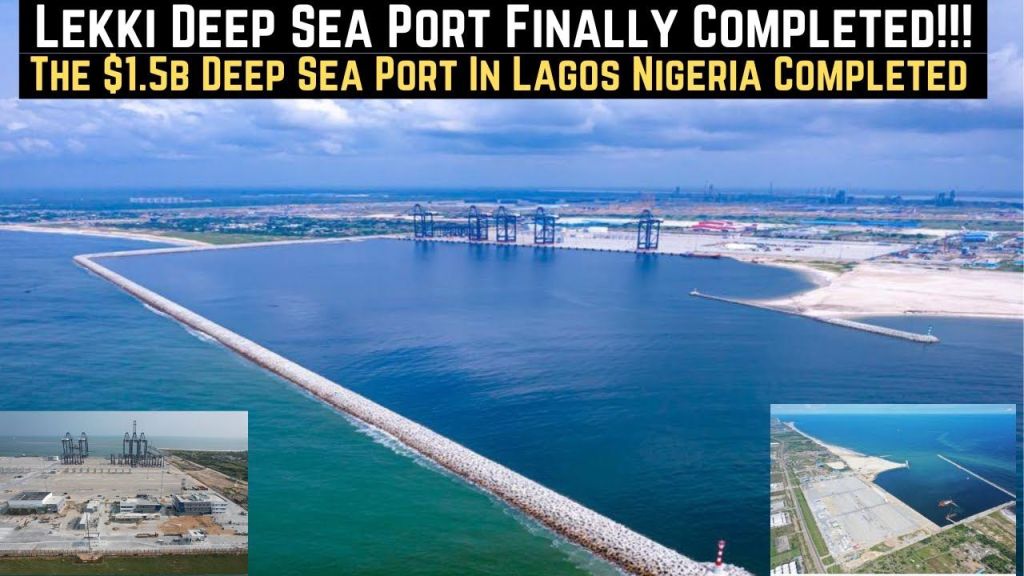
Nigeria’s coastline, stretching over 850 kilometers, offers significant potential for maritime activities and economic development, particularly through the establishment of deep-sea ports. With the Lekki deep-sea port already operational and additional proposals for two or three more ports, the economic implications can be substantial, especially if these ports achieve effective capacity utilization.
Here are some key economic implications:
- Increased Trade Volume and Revenue Generation
Deep-sea ports have the capacity to handle larger vessels and higher volumes of cargo. This would enhance Nigeria’s ability to participate in international trade, boosting imports and exports. It could position Nigeria as a key maritime hub in West Africa, increasing revenue from port fees, customs duties, and associated logistics services.
- Boost to the Manufacturing and Export Sectors
With effective capacity utilization, these ports could reduce the cost and time involved in transporting goods. This would make Nigerian products more competitive globally, encouraging local manufacturing and the export of goods like agricultural products, oil, gas, and finished goods. Industries relying on imports for raw materials would also benefit from quicker supply chains.
- Reduction in Port Congestion and Costs
Nigeria’s current ports, particularly Apapa in Lagos, suffer from chronic congestion. The development of additional deep-sea ports would ease this pressure, reducing delays, demurrage, and other inefficiencies that currently cost businesses millions of dollars annually. With more ports operating at optimal capacity, logistics costs could decrease, benefiting both local businesses and foreign investors.
- Attraction of Foreign Direct Investment (FDI)
Deep-sea ports, especially with modern infrastructure, are attractive to foreign investors in sectors such as shipping, logistics, warehousing, and manufacturing. Effective utilization of these ports could lead to the development of industrial clusters and free trade zones, drawing significant FDI and creating new economic opportunities.
- Job Creation and Skills Development
The operation and expansion of deep-sea ports would create thousands of direct and indirect jobs, from construction and port operations to logistics, warehousing, and ancillary services. There would also be opportunities for skills development, particularly in maritime-related professions, enhancing human capital in Nigeria.
- Boost to Regional Trade
As the African Continental Free Trade Agreement (AfCFTA) takes effect, Nigeria’s deep-sea ports could play a pivotal role in facilitating intra-African trade. Ports with excess capacity could become transshipment hubs, handling cargo for neighboring West African countries that lack such infrastructure.
- Competition and Improved Port Services
The development of multiple deep-sea ports would foster competition between operators, potentially driving down costs and improving service delivery. Efficient port operations, combined with modern facilities, would likely enhance Nigeria’s competitiveness in the global maritime industry.
- Infrastructure Strain and Potential Overcapacity
On the downside, if the pace of port development exceeds demand, there could be an underutilization of infrastructure, leading to wasted investments. It’s important that development aligns with projected trade growth and that supporting infrastructure—roads, rail, and storage facilities—are in place to maximize port efficiency.
- Diversification of the Economy
The reliance on oil exports could decrease as effective capacity utilization at multiple deep-sea ports would encourage diversification into other sectors like agriculture, technology, and manufacturing. This could reduce Nigeria’s vulnerability to oil price fluctuations and contribute to long-term economic stability.
- Environmental and Social Impacts
Increased maritime traffic and industrial activities could have environmental consequences, such as pollution and coastal erosion. Therefore, sustainable practices and environmental management will be critical as Nigeria develops more deep-sea ports to avoid long-term damage to its coastal ecosystems.
In summary, the economic implications of developing and utilizing multiple deep-sea ports effectively in Nigeria are vast, from boosting trade and investment to creating jobs and fostering industrial growth. However, careful planning and coordination are essential to avoid issues like overcapacity and ensure that the necessary supporting infrastructure is developed in parallel.

 Nigeria Maritime Online
Leave a comment