
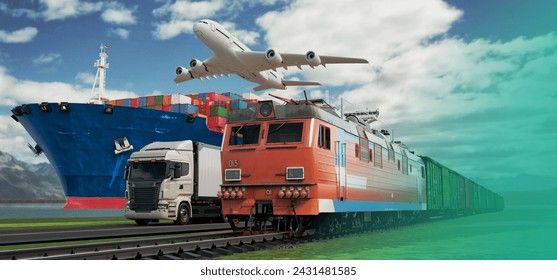
Integrated transportation plays a crucial role in driving the growth of the maritime industry by enhancing efficiency, connectivity, and overall supply chain performance. Maritime transport, responsible for moving about 80% of global trade by volume, depends heavily on smooth connections to other modes of transportation, such as rail, road, and air, to ensure goods reach their final destination.
Key Points of Integrated Transportation for Maritime Growth:
1. Seamless Connectivity: Integrated transportation ensures that goods transported by sea are efficiently transferred to other transport modes. Ports act as multimodal hubs where goods can be swiftly shifted to rail, road, or air. Efficient port operations and intermodal systems reduce delays, bottlenecks, and costs, making maritime trade more competitive.
2. Cost Efficiency and Reduced Transit Time: When maritime shipping is effectively integrated with inland transport systems, it reduces the total transit time for goods. Well-connected rail or road networks can move cargo quickly from ports to distribution centers or end markets. This minimizes demurrage costs, storage fees, and overall transportation expenses.
3. Environmental Sustainability: Integrated transport systems that emphasize the use of rail and water over long distances help reduce carbon emissions. By reducing reliance on road transport, which is more energy-intensive, the maritime industry can contribute to sustainability goals. The synergy between maritime shipping and other environmentally friendly modes (e.g., rail) enhances the eco-efficiency of global supply chains.
4. Improved Infrastructure: The development of integrated transportation often leads to improvements in port infrastructure, better road networks, and enhanced rail connectivity. Modernizing these infrastructure elements is essential for ports to handle larger vessels and higher volumes of goods, which in turn supports maritime growth.
5. Digital Integration and Technology: Technological advancements such as real-time tracking, automation, and smart logistics systems allow for better coordination between sea and land transport. Integrating digital platforms ensures that stakeholders across various transport modes have visibility over cargo movement, enabling smoother transitions between transportation types and reducing errors or delays.
6. Regional and Global Trade Competitiveness: Regions that develop advanced integrated transport systems position themselves as major global trade hubs. For instance, countries like Singapore and the Netherlands have successfully leveraged their strong maritime and intermodal connectivity to become key global shipping centers.
Conclusion:
Integrated transportation is imperative to maritime growth as it enhances the efficiency and sustainability of global supply chains. By linking maritime with road, rail, and air transport, the industry can provide faster, more cost-effective services while adapting to the increasing demand for seamless logistics solutions. The synergy between different transport modes is key to driving the future of maritime trade and ensuring its ongoing expansion in an increasingly connected global economy.

 Nigeria Maritime Online
Leave a comment